
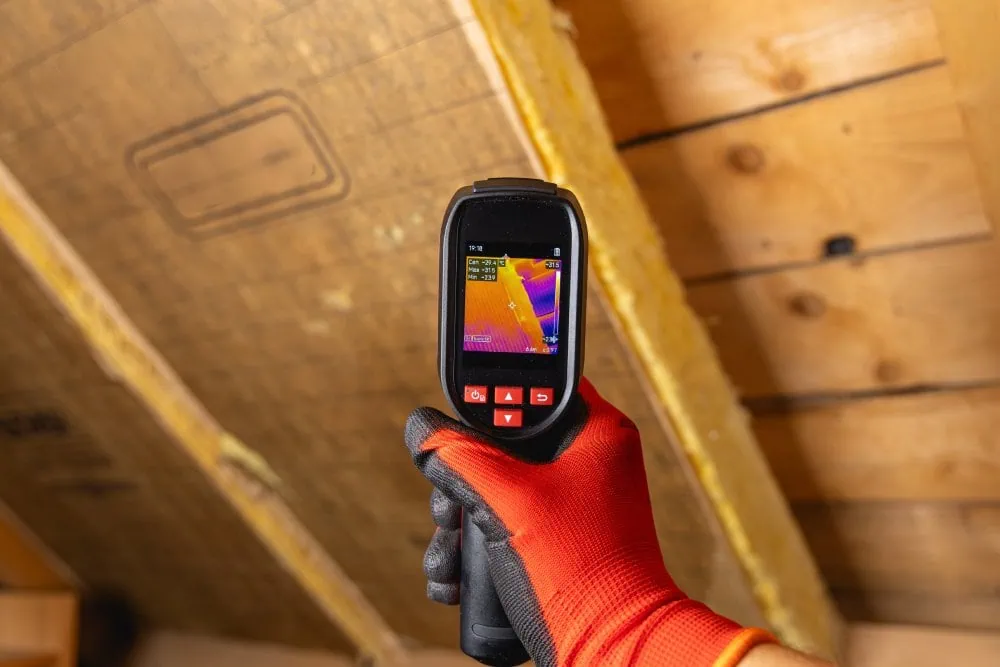
Metal buildings are valued for their strength, durability, and long service life. However, they also absorb and transfer heat quickly, especially during periods of intense sunlight. Without an effective thermal management system, indoor temperatures can rise significantly, placing extra demand on cooling equipment and creating uncomfortable working conditions.
Heat gain affects more than occupant comfort. It can increase energy costs, reduce HVAC efficiency, and expose equipment, inventory, and building materials to higher temperatures. Warehouses, manufacturing plants, agricultural facilities, workshops, and commercial buildings are especially vulnerable because of their large metal roof and wall surfaces.
Reducing heat gain starts with selecting the right combination of insulation and protective building products. While traditional insulation remains an important part of the building envelope, advanced solutions like ceramic insulation can help improve thermal performance by limiting radiant heat transfer. Ceramic insulation offers another layer of protection that supports energy efficiency while helping preserve the condition of metal surfaces.
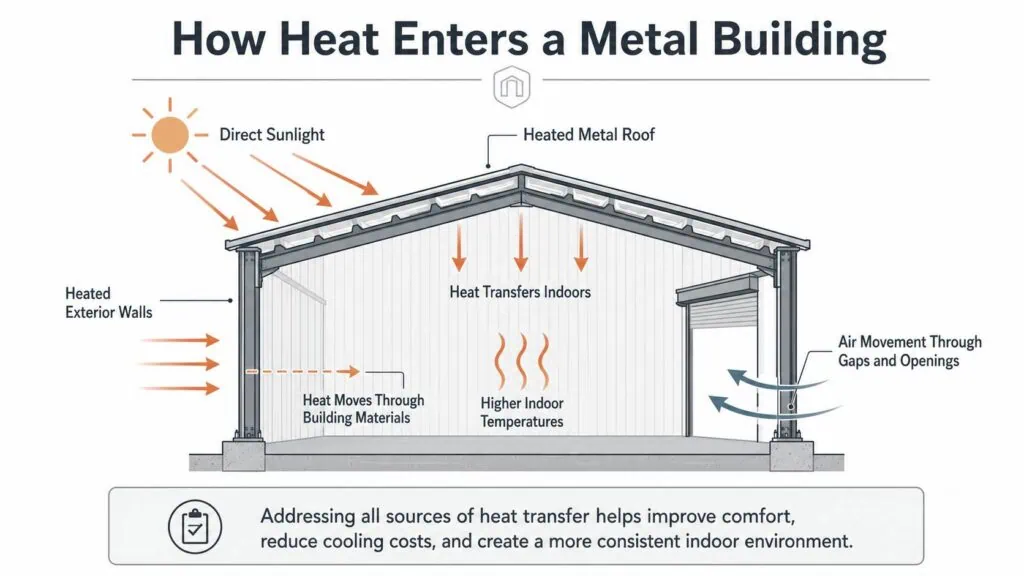
Understanding How Heat Enters a Metal Building
Heat enters a metal building in several ways. Direct sunlight heats the roof and exterior walls, and the metal transfers that heat indoors. Air movement through gaps and openings can also increase indoor temperatures, while heat naturally moves through building materials over time.
To improve comfort and reduce cooling costs, it is important to address all sources of heat transfer rather than relying on one solution alone. A complete approach helps create a more consistent indoor environment throughout the year.
Why Traditional Insulation Isn’t Always Enough
Fiberglass batts, rigid foam boards, and spray foam insulation all play valuable roles in reducing heat transfer. Even so, they may not fully address radiant heat gain, which is one of the biggest contributors to heat gain in metal buildings. Steel framing can transfer thermal bridges through conduction that allow heat to bypass insulation.
Adding a thermal barrier coating creates another layer of protection that works alongside existing insulation instead of replacing it. This combination can improve overall building performance while extending the life of the structure.
- Reduces radiant heat entering through roofs and walls
- Supports lower indoor temperatures during hot weather
- Helps improve HVAC efficiency
- Protects metal surfaces from air and moisture intrusion and corrosion
- Works with existing insulation systems for added thermal performance
How Ceramic Thermal Barrier Coatings Help Reduce Heat Gain
A ceramic thermal barrier coating is applied directly to building surfaces to help reduce radiant heat transfer. ThermaCote’s ceramic-based coating uses advanced ceramic technology to create a protective barrier that reflects and resists heat while helping protect the substrate underneath.
For building owners looking for practical ways to improve energy performance, ceramic insulation offers more than temperature control. It also helps protect metal roofs and walls from weather exposure, air and moisture intrusion, and corrosion, helping reduce maintenance over time.
Additional Benefits and Best Practices
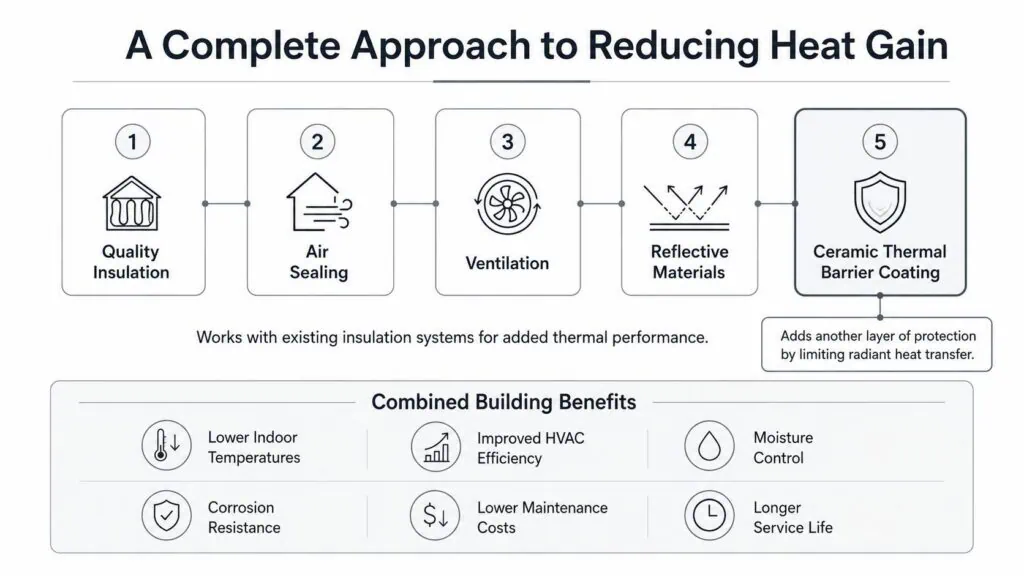
Reducing heat gain improves comfort, lowers HVAC strain, and helps protect stored materials. It also supports corrosion resistance, moisture control, lower maintenance costs, and a longer service life.
Ceramic materials are used across industries for their durability. Ceramic electrical insulators are one example, showing how ceramic technology performs well in demanding environments.
For metal buildings, the best results usually come from combining quality insulation, air sealing, ventilation, reflective materials, and a ceramic thermal barrier coating. ThermaCote helps building owners add that extra layer of protection while supporting energy efficiency and preserving metal surfaces.
Beat the Heat with ThermaCote
Your metal building doesn’t have to work against you. With ThermaCote’s ceramic thermal barrier coating, you can reduce heat gain, improve energy efficiency, and help protect your building for years to come. Contact ThermaCote today to find the right solution for your next project.
FAQ
- Can ceramic weather barrier coatings be applied to existing metal buildings?
Yes. Ceramic thermal barrier coatings can be applied to both new construction and existing metal buildings, making them a practical option for retrofit projects that aim to improve thermal performance and extend the life of the structure.
- How long does a ceramic thermal barrier coating last?
The lifespan depends on the product, application quality, and environmental conditions. When properly applied and maintained, high-quality ceramic coatings can provide long-term performance and reduce the need for frequent recoating with thermacote interior applications warrantied for the life the structure.
- Does a ceramic weather barrier coating require special maintenance?
Generally, ceramic weather barrier coatings require minimal maintenance. Periodic inspections and routine cleaning can help maintain their appearance and performance while allowing any damage to be addressed early.
- Can ceramic weather barrier coatings be used on surfaces other than metal?
Many ceramic thermal barrier coatings are compatible with multiple substrates, including concrete, masonry, and wood. Always confirm compatibility with the coating manufacturer before application.
- Is a ceramic thermal barrier coating suitable for all climates?
Yes. Ceramic insulating coatings are commonly used in both hot and cold climates. They help manage heat transfer year-round, making them a valuable addition to buildings exposed to varying weather conditions.